Navigating menopause often involves exploring various options to manage symptoms like hot flashes and night sweats. Two commonly discussed approaches are black cohosh and hormone therapy (HT). Understanding the differences, potential benefits, and considerations for each can help women make informed decisions.
This article provides an evidence-based comparison of black cohosh and hormone therapy, focusing on their roles in managing menopausal symptoms. We’ll review available research to offer a clear, non-hyped perspective on these options.
Understanding Hormone Therapy (HT) for Menopause
Hormone therapy (HT), previously known as hormone replacement therapy (HRT), involves taking estrogen, and often progesterone, to supplement the body’s declining hormone levels during menopause. It is considered an effective option for alleviating various menopausal symptoms, particularly vasomotor symptoms like hot flashes and night sweats [1].
HT can be administered in various forms, including pills, patches, gels, and sprays. The specific type and dosage of hormones are tailored to an individual’s needs and medical history. While effective, the decision to use HT involves a careful consideration of its benefits against potential risks, which can vary depending on individual health factors and the duration of use.
Black Cohosh: A Phytotherapy Option for Menopause
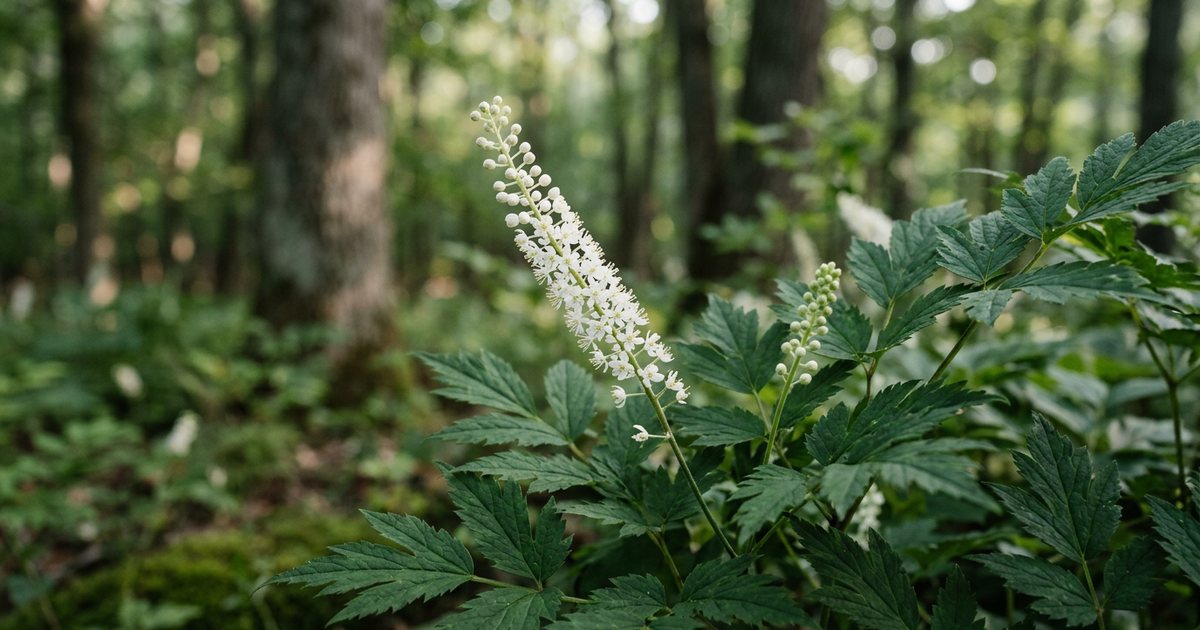
Black cohosh (Actaea racemosa or Cimicifuga racemosa) is a botanical widely used to address menopausal symptoms, particularly hot flashes and night sweats [2]. It has a long history of use in traditional medicine and is available as a dietary supplement, often in standardized extracts.
The mechanisms by which black cohosh may influence menopausal symptoms are not fully understood but are thought to involve interactions with neurotransmitters or other pathways rather than direct estrogenic effects [3]. Research has explored different preparations of black cohosh, with some studies focusing on specific standardized extracts, such as isopropanolic black cohosh extract [4].

Efficacy Comparison: Black Cohosh vs. Hormone Therapy
When comparing the efficacy of black cohosh and hormone therapy, research suggests differing levels of effectiveness for managing menopausal symptoms. Hormone therapy is generally recognized for its robust impact on vasomotor symptoms [1]. For instance, a randomized trial found that conjugated equine estrogen significantly reduced the frequency and severity of hot flashes compared to placebo [1].
Black cohosh, while widely used, has shown mixed results across studies. Some research indicates that specific standardized black cohosh extracts can help reduce menopausal symptoms, including hot flashes and night sweats, compared to placebo [4]. A meta-analysis, for example, supported the efficacy of an isopropanolic black cohosh extract for menopausal symptoms [4]. However, other studies have found black cohosh to be no more effective than placebo for vasomotor symptoms [1]. The Cochrane review on black cohosh for menopausal symptoms concluded that there is insufficient evidence to support its use for menopausal symptoms, highlighting the variability in study designs and preparations used [2].
It’s important to note that the strength of evidence for black cohosh can be moderate, with variations depending on the specific extract and study design. For example, one study compared an isopropanolic black cohosh extract to tibolone (a synthetic steroid with estrogenic, progestogenic, and androgenic properties) in women with menopausal symptoms and uterine fibroids, suggesting potential benefits [5]. However, overall, HT is often considered to have a stronger and more consistent effect on severe vasomotor symptoms [6].
Safety and Side Effects: Black Cohosh vs. Hormone Therapy
Both black cohosh and hormone therapy have potential side effects and safety considerations that women should discuss with their healthcare providers.
Hormone therapy carries known risks, which can include an increased risk of blood clots, stroke, heart disease, and certain cancers, depending on the type of HT, duration of use, and individual risk factors. These risks are typically weighed against the severity of menopausal symptoms and individual health profiles.

Black cohosh is generally considered well-tolerated by many women. Potential side effects can include gastrointestinal upset, headache, and rash. There have been rare reports of liver issues associated with black cohosh, though a causal link has not been definitively established, and the quality and purity of supplements can vary [7]. It is crucial to choose reputable brands and inform your healthcare provider about any supplements you are taking. The evidence on the safety profile of non-hormonal treatments, including black cohosh, continues to evolve [8].
Considerations for Choosing an Approach
The decision between black cohosh and hormone therapy, or any other approach, is highly personal and should be made in consultation with a healthcare provider. Factors to consider include the severity of menopausal symptoms, personal health history, potential risks and benefits of each option, and individual preferences.
For women with severe vasomotor symptoms, hormone therapy may offer more significant relief [1]. For those seeking non-hormonal options or who have contraindications to HT, black cohosh might be considered, particularly if specific standardized extracts have shown promise in research [4]. The evolving understanding of herbal remedies in menopause continues to bridge traditional medicine and modern therapeutics [9].
It’s also important to remember that lifestyle adjustments, such as diet, exercise, and stress management, can play a supportive role in managing menopausal symptoms regardless of other interventions [10].
References
- Treatment of vasomotor symptoms of menopause with black cohosh, multibotanicals, soy, hormone therapy, or placebo: a randomized trial. Annals of internal medicine, 2006
- Black cohosh (Cimicifuga spp.) for menopausal symptoms. The Cochrane database of systematic reviews, 2012
- Non-estrogen conventional and phytochemical treatments for vasomotor symptoms: what needs to be known for practice. Climacteric : the journal of the International Menopause Society, 2012
- Review & meta-analysis: isopropanolic black cohosh extract iCR for menopausal symptoms – an update on the evidence. Climacteric : the journal of the International Menopause Society, 2021
- Efficacy of a standardized isopropanolic black cohosh (Actaea racemosa) extract in treatment of uterine fibroids in comparison with tibolone among patients with menopausal symptoms. Holistic nursing practice, 2014
- Non-hormonal therapy of post-menopausal vasomotor symptoms: a structured evidence-based review. Archives of gynecology and obstetrics, 2007
- Botanical and dietary supplements for menopausal symptoms: what works, what does not. Journal of women’s health (2002), 2005
- [Evidence-based Facts of non-hormonal treatment of menopausal symptom]. Therapeutische Umschau. Revue therapeutique, 2021
- Efficacy of Herbal Remedies in Menopause: Bridging Traditional Medicine and Modern Therapeutics. Current drug research reviews, 2025
- Contemporary alternatives to plant estrogens for menopause. Maturitas, 2006
These statements have not been evaluated by the Food and Drug Administration. This information is not intended to diagnose, treat, cure, or prevent any disease. Content is for informational purposes only and is not medical advice; consult a qualified healthcare provider before starting any supplement. As an Amazon Associate we earn from qualifying purchases.
